
Special thanks to xxxx for supporting true irish news and for there contribution to the XXX charity



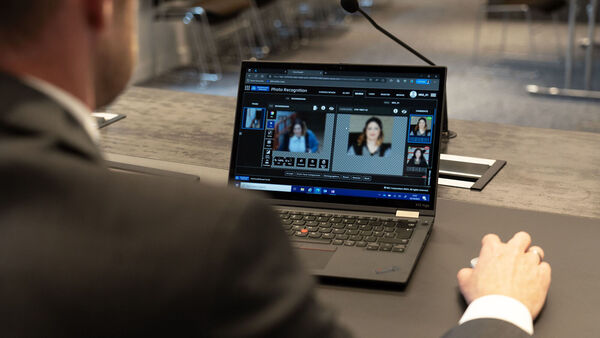
In the ever-evolving landscape of law enforcement, the spotlight turns to Dublin as the Garda grapples with a trove of 22,000 hours of footage from the November riots, igniting a heated debate on the potential integration of Facial Recognition Technology (FRT).
As an Oireachtas committee convenes to dissect the merits and risks, a clash of perspectives emerges, offering a glimpse into the future of policing in Ireland.
Garda Commissioner Drew Harris on the Frontlines Garda Commissioner Drew Harris steps into the arena, armed with a compelling argument that manual processing of digital evidence is reaching a tipping point.
The surge in violent crimes and major investigations inundated law enforcement with an explosion of digital footage, making traditional methods unfeasible and ineffective.
For Mr. Harris, the pressing need for modernization is underscored by the staggering 22,000 hours of footage from the Dublin riots alone. Individual murder investigations dwarf even this number, with upwards of 50,000 hours of footage, and seized devices unveiling over a million images of child sexual abuse.
In the face of this digital deluge, Harris contends that FRT is not a luxury but a necessity for a more efficient and effective investigative process.
A Cautionary Tale In the opposing corner stand civil liberties groups, armed with a stern warning against the adoption of FRT in Irish policing. They argue that the risks are "too high" and caution against viewing FRT as a "silver bullet solution."
The Irish Council for Civil Liberties (ICCL) and Digital Rights Ireland (DRI) raise a chorus of concerns, citing the engagement of fundamental human rights, including dignity, privacy, data protection, and the right to protest.
Their contention is that FRT is not the panacea it's painted to be—labeling it as unreliable and pointing to inherent racial and gender biases.
They underscore the potential for powerful and indiscriminate surveillance, urging the Government to reconsider its proposal and emphasizing the need for a cautious approach to the introduction of FRT.
he Data Protection Commission's Call for Caution Adding weight to the skepticism, the Data Protection Commission (DPC) acknowledges the potential benefits of FRT for law enforcement but issues a stark reminder of the risks to individual data protection rights.
The DPC insists on the implementation of necessary restrictions, limitations, and safeguards, stressing the need for a Data Protection Impact Assessment (DPIA) before the technology's introduction.
The Future in Focus Commissioner Harris steps forward to dispel public concerns and confusion surrounding artificial intelligence technology. He assures that there is no room for autonomous machine decision-making, with all impactful decisions being made by identifiable and accountable personnel.
As the debate unfolds, he champions the reliability of modern biometric identification systems, emphasizing the necessity for proportionate safeguards in the face of evolving risks.
The Oireachtas committee now stands at the crossroads, tasked with navigating the delicate balance between the imperative for modernization in law enforcement and the protection of fundamental human rights.
As Ireland peers into the future, the integration of Facial Recognition Technology remains a contentious and critical juncture in shaping the nation's policing landscape.