Dublin’s Darkest Day in the 1940s
The 1940s were a decade of global upheaval, and while Ireland maintained a policy of neutrality during World War II, it was not entirely insulated from the war’s ravages. Of course, most famously at the end of the 1940s, Ireland officially became a republic. Each county across the country had an interesting time of events in the 1940s.
One of the most significant and tragic events to impact Dublin during this time was the North Strand bombing on May 31, 1941. This article explores the details of the bombing, its causes, the immediate aftermath, and its long-term effects on Dublin and its residents.
Historical Context
During World War II, Ireland, under the leadership of Taoiseach Éamon de Valera, adopted a stance of neutrality, known as “The Emergency.” Despite this neutral position, Ireland faced numerous challenges, including economic hardships, rationing, and the threat of espionage. The country’s proximity to Britain meant that it was often at risk from stray attacks and bombings intended for British targets.
Dublin, as the capital city, was particularly vulnerable. Its industrial areas and proximity to the sea made it a potential target for German bombers. The most devastating of these incidents occurred on the night of May 31, 1941, when German bombs fell on the North Strand area.
The North Strand Bombing: May 31, 1941
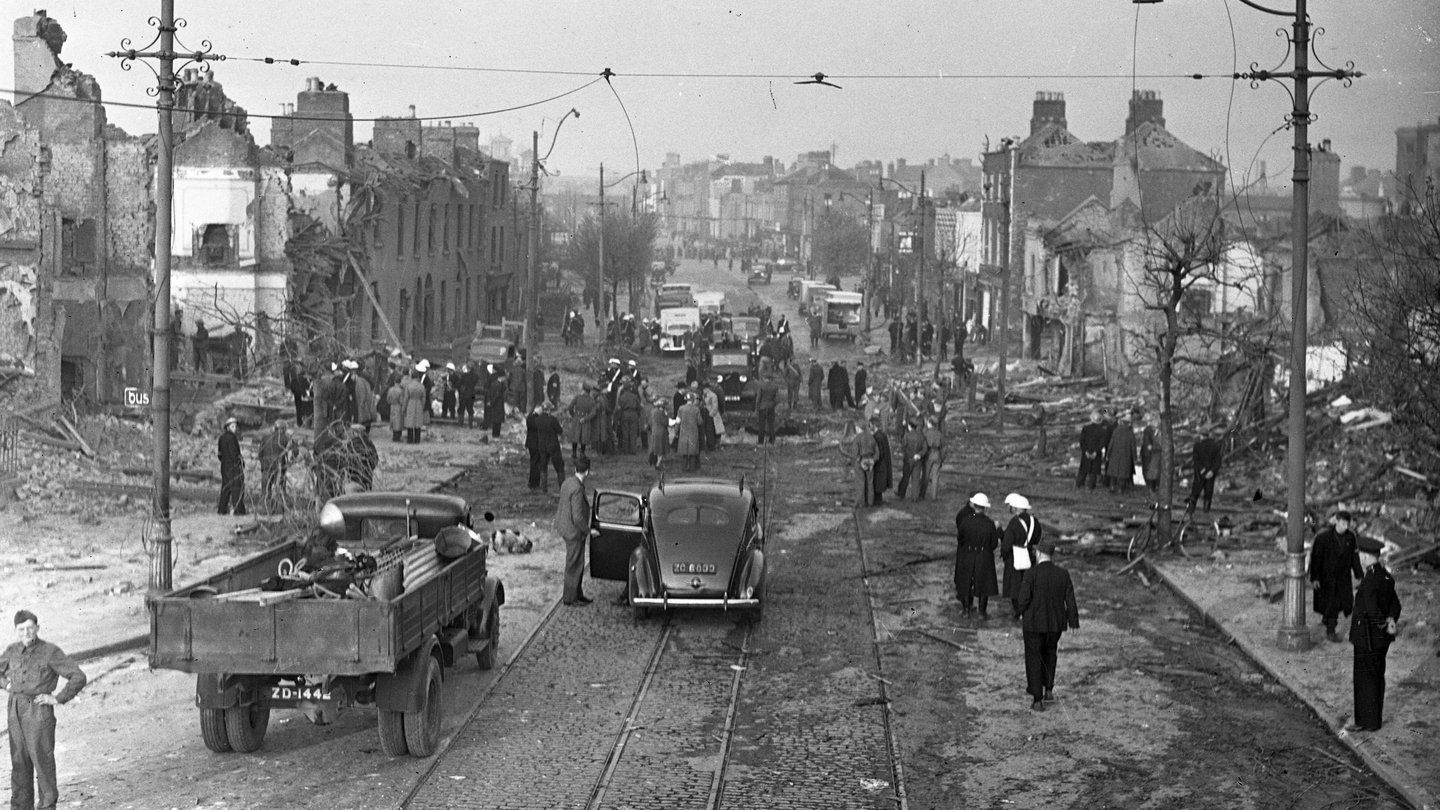
On the night of May 31, 1941, Dubliners were shocked from their sleep by the sound of explosions. At around 1:30 a.m., four German bombs were dropped on the city. The most devastating of these struck the North Strand area, a densely populated working-class district. The bombing resulted in the deaths of 28 people, injured 90 others, and left hundreds homeless.
The attack was believed to be a navigational error, with the bombs intended for British targets. However, the exact reason for the bombing remains a subject of historical debate. Some theories suggest it was a deliberate act of intimidation or a response to Ireland’s neutrality, while others maintain it was a tragic mistake.
Immediate Aftermath
The aftermath of the bombing was one of chaos and devastation. Buildings were reduced to rubble, and fires raged in the damaged areas. Emergency services, including the Dublin Fire Brigade, the Gardaí, and the local community, sprang into action to rescue survivors and tend to the injured.
The government’s response was swift. Taoiseach Éamon de Valera visited the site, offering condolences and support to the victims and their families. The Irish Red Cross and various charitable organizations mobilized to provide relief, setting up shelters and distributing food and clothing to those affected by the bombing.
The government also launched an investigation into the incident and increased measures to improve civil defense. This included better air raid precautions, the establishment of more bomb shelters, and enhanced training for emergency response teams.
Memorials and Remembrance
In the years following the bombing, several memorials were established to honor the victims. A plaque was installed at the site of the bombing, listing the names of those who lost their lives. Annual commemorative events were held to remember the victims and recognize the bravery of the emergency responders and ordinary citizens who risked their lives to save others.
These memorials and events served as a focal point for collective mourning and reflection, helping the community to come to terms with the tragedy. They also highlighted the resilience and solidarity of Dubliners in the face of adversity.
Cultural and Historical Significance
The North Strand bombing remains a significant chapter in Dublin’s history. It is a poignant reminder of the impact of global conflicts on neutral nations and the human cost of war. The bombing is often cited in historical discussions about Ireland’s role during World War II and the country’s efforts to navigate its neutral stance amid the turmoil of the time.
For historians and residents alike, the North Strand bombing represents a moment of profound loss but also of extraordinary community spirit and resilience. The stories of those who lived through the bombing continue to be shared, ensuring that the memory of the event and its impact on Dublin are not forgotten.
Conclusion
The North Strand bombing of May 31, 1941, stands as one of the most significant and tragic events in Dublin during the 1940s. The bombing had immediate and long-term impacts on the city and its residents, highlighting the vulnerabilities and challenges faced by neutral Ireland during World War II.
The event also showcased the resilience and solidarity of the Dublin community, with stories of bravery and compassion emerging from the devastation. As Dublin continues to reflect on its history, the North Strand bombing remains a poignant reminder of the city’s endurance and the enduring spirit of its people in the face of adversity.





.png)